Blog30 October 2026
Historical Restaurants in Bologna Still Open Today
Historical restaurants in Bologna's old centre that are still open: a 1465 osteria, century-old food shops, a 1909 dining room and Italy's oldest chocolatier.
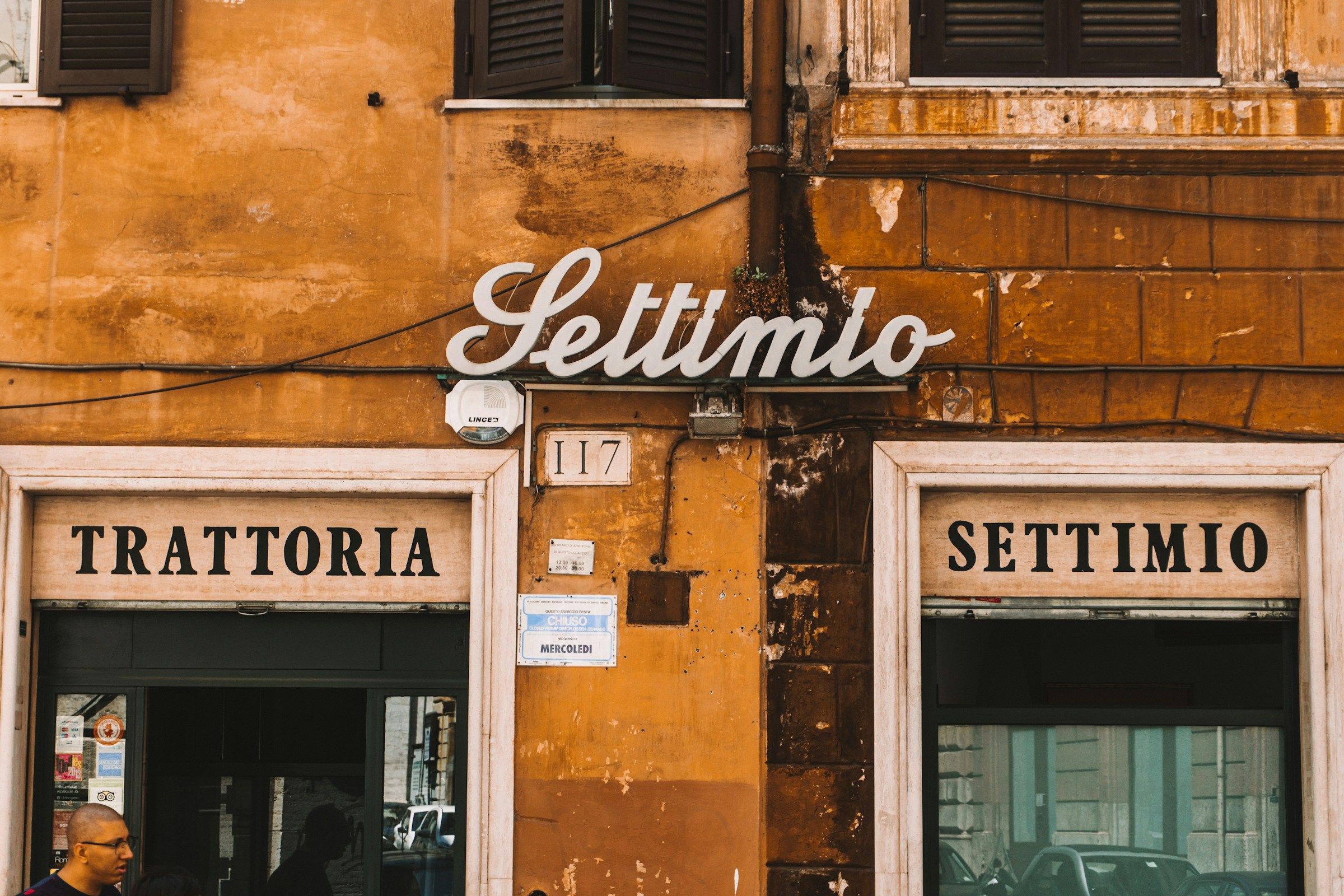
Bologna is an old city that still eats in old places, and many of the historical restaurants in Bologna are still part of everyday life. Walk a few minutes from Piazza Maggiore and you can drink wine in a room that has served it since the fifteenth century, buy bread from a family that has baked it for five generations, and have lunch in a dining room that opened before the First World War.
This is our guide to the oldest dining rooms, osterie and food shops of the centro storico that are still open and still worth visiting. Not museums with a menu, but places that people here use every week.
We have kept this list to places whose history we could check, and which are still trading in 2026. Opening hours change, so always look before you go.
What Counts as “Historical” in Bologna
Before the places, a little vocabulary, because in Bologna the kind of place matters as much as its age.
- Osteria. Originally a place to drink wine, sometimes with simple food, often with none. The oldest ones were where merchants, students and travellers met. Today many osterie serve full meals, but the name still suggests something informal.
- Trattoria. A family-style restaurant with a short menu of home cooking: fresh pasta, a few meat dishes, house wine.
- Ristorante. More formal, with tablecloths, waiters in jackets and a longer menu.
- Bottega. A shop. In the old market streets, the bottega is often the most historic thing of all: a salumeria, a bakery or a fresh pasta shop that has been on the same corner for well over a century.
If you want the longer version of these differences, we wrote about them in osteria, trattoria or enoteca.
The city’s tourist board, Bologna Welcome, keeps a list of botteghe storiche, historic shops, and it is a useful place to start if you want to go beyond this guide.

Osteria del Sole: Wine Since 1465
Hidden in Vicolo Ranocchi, a narrow lane in the Quadrilatero just behind Piazza Maggiore, the Osteria del Sole dates back to 1465. It is often described as one of the oldest osterie in Italy, and it still works the way the old osterie did.
It serves drinks. That is all. Wine, mostly, along with beer, and no food at all. Instead, you are welcome to bring your own. Regulars arrive with paper parcels of mortadella, salame and cheese from the shops in the surrounding streets, or with something cooked at home, and share it over a glass.
The Spolaore family has run the osteria since 1945, across three generations. In 2009, when the building was put up for sale at a price the family could not meet, a local banking foundation bought it so that the osteria could stay. That is a very Bolognese story: a city deciding that an old wine room was worth protecting.
How to do it well: buy your food first in the Quadrilatero, arrive in the late morning or early evening, order a glass at the counter and find a seat. It is loud, simple and full of locals. Do not expect a menu, and do not ask for a soft drink.
The Old Food Shops of the Quadrilatero
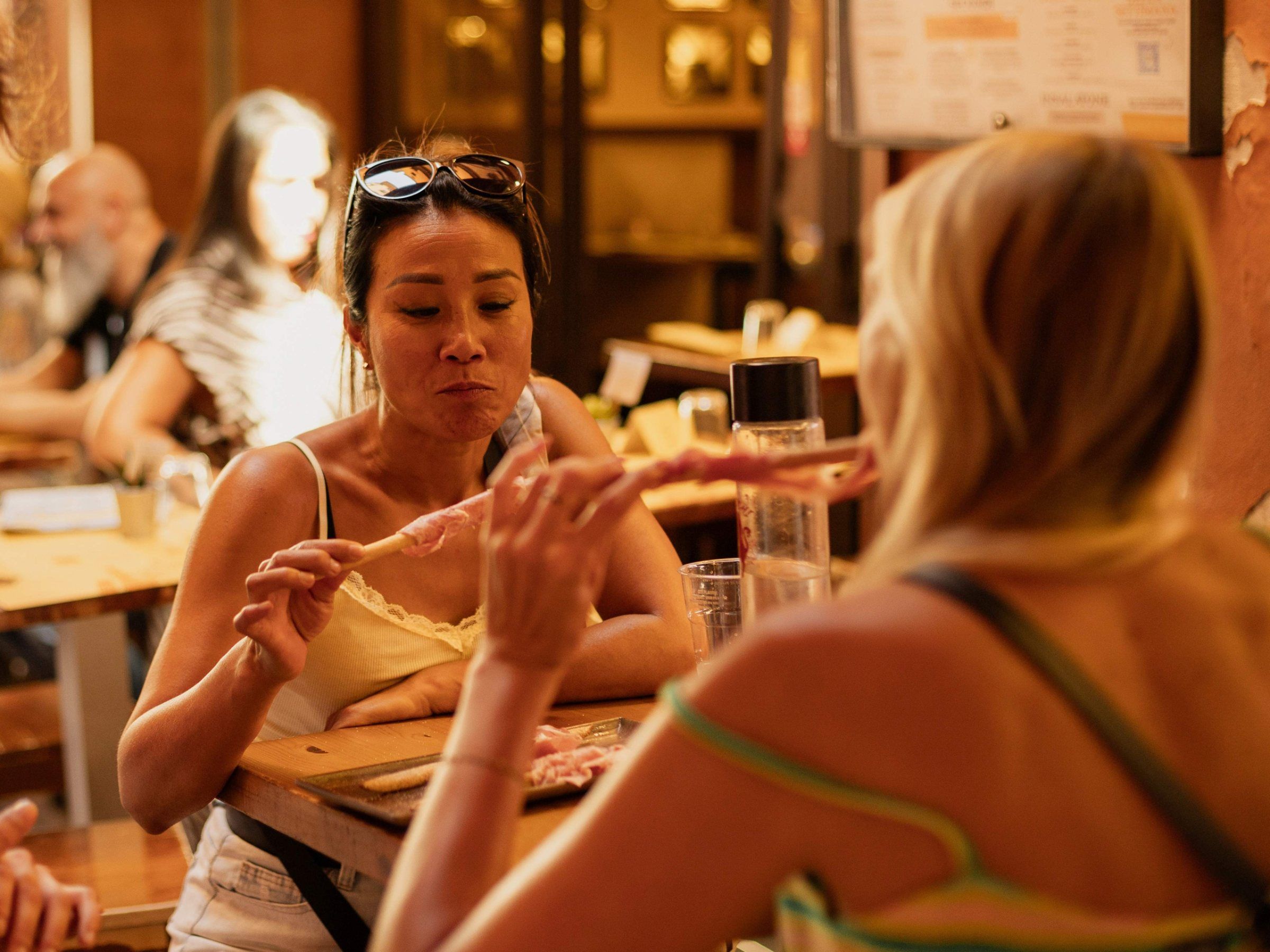
The Quadrilatero is the grid of narrow streets between Piazza Maggiore and the Two Towers, and it has been Bologna’s market since the Middle Ages. Street names such as Via Drapperie and Via Pescherie Vecchie still recall the trades that once filled them. Two shops here have been part of the city’s daily life for generations.
Tamburini. On the corner of Via Caprarie and Via Drapperie, there has been a food business on this site since 1860, and the Tamburini family took it over in 1932. It is a classic salsamenteria, an old name for a shop selling cured meats and cheese, and it also sells the city’s specialities, tortellini included.
There is also a tasting room where you can sit and eat what the shop sells, which makes it a practical stop for lunch in the middle of the market streets. Look for the plaque outside dedicated to Padre Marella, the priest who used to collect money for the poor on this corner.
Paolo Atti & Figli. A few steps away at Via Drapperie 6, Paolo Atti & Figli was founded in the early 1800s and has been run by the same family for five generations. This is the original shop, and its old signs are still on the façade.
Atti is known for bread and for the specialità petroniane, the traditional Bolognese specialities named after the city’s patron saint, San Petronio. Come for a loaf and something traditional to take away, and take a moment to look at the shop itself, one of the best-preserved in the market streets.

Historical Restaurants in Bologna’s City Centre: Ristorante Diana
For a sit-down meal with a long history behind it, Ristorante Diana is the classic. It opened in 1909 as a café at Via dell’Indipendenza 24, and over more than a century it became one of the city’s best-known traditional dining rooms. Lucio Dalla, the much-loved Bolognese singer, was among its regulars.
After a renovation in 2018 the entrance moved round the corner to Via Volturno. In 2025 the restaurant changed hands, bought by a group that already runs several traditional Bologna trattorie, and the new owners said they would keep the cooking firmly rooted in Bolognese tradition.
This is the place for the formal side of the city’s cooking: tortellini, lasagne and, in the colder months, bollito misto, the platter of boiled meats served with sauces. Book ahead and dress for a proper lunch.
For another long-established table in the centre, Da Cesari in Via de’ Carbonesi has been in business for more than a century. We included it in our guide to traditional restaurants in Bologna.
Majani: Chocolate Since 1796
Not a restaurant, but impossible to leave out. Majani was founded in Bologna in 1796 and is often called the oldest chocolate maker in Italy. Its city shop is at Via de’ Carbonesi 5, a short walk from Piazza Maggiore.
Majani’s most famous creation has a curious history. In 1911 the car maker Fiat ran a competition among Italian chocolatiers to promote a new model. Majani won with a four-layer chocolate of gianduja and almond paste, which is still sold today as the Cremino Fiat. It is a very good thing to bring home, and much lighter in your suitcase than a wheel of Parmigiano.
How to Enjoy Bologna’s Historical Places
A few things we have learned from years of eating in these streets:
Go at local times. Bolognesi lunch from around half past twelve and rarely sit down to dinner before half past seven. Arriving at those times means you eat with the city rather than in an empty room.
Check opening days. Many family businesses close one day a week, and summer holidays can mean closures too. A quick look at their website or Bologna Welcome saves a disappointing walk.
Order the classics. Historical places are at their best with the dishes they have always made. Tortellini, tagliatelle al ragù and lasagne are the point. If you want the story behind the sauce, read the long road to ragù.
Combine them. The best way to see the old centre is to link these places together: bread and salumi in the Quadrilatero, a glass at the Osteria del Sole with your parcel of food, then a long lunch or a box of chocolates to finish.
Be patient. These are working places, not attractions. Wait your turn, say buongiorno when you walk in, and you will be treated like everyone else, which in Bologna is the highest compliment.
If you would rather explore the old town’s food with someone who lives here, our small-group food tours in Bologna are one way to do it. Either way, the historic centre rewards anyone who slows down, looks up at the old shop signs and takes the time to sit.