Blog16 November 2026
The Best Tours in Bologna: What's Worth Booking
The best tours in Bologna, honestly: a guided walk of the centre, the towers you can still climb, the Anatomical Theatre, San Luca, food tours and day trips.

Search for Bologna tours and you get a wall of options: walking tours, food tours, bike tours, towers, tourist trains, Ferrari museums, day trips to three different cities. Most of them are fine. A few are excellent. Some are things you could do just as well on your own with a good map and an early start.
We run food tours in this city, so we are not neutral about one category. But we also live here, we send friends and family around Bologna every year, and we know which tours we would book ourselves. This is our honest guide to the best tours in Bologna in 2026: what each one gives you, what has changed recently, and when you are better off going it alone. We have only included what we could check, and schedules change with the seasons, so always look at the current timetable before you set out.
A Guided Walk of the Historic Centre
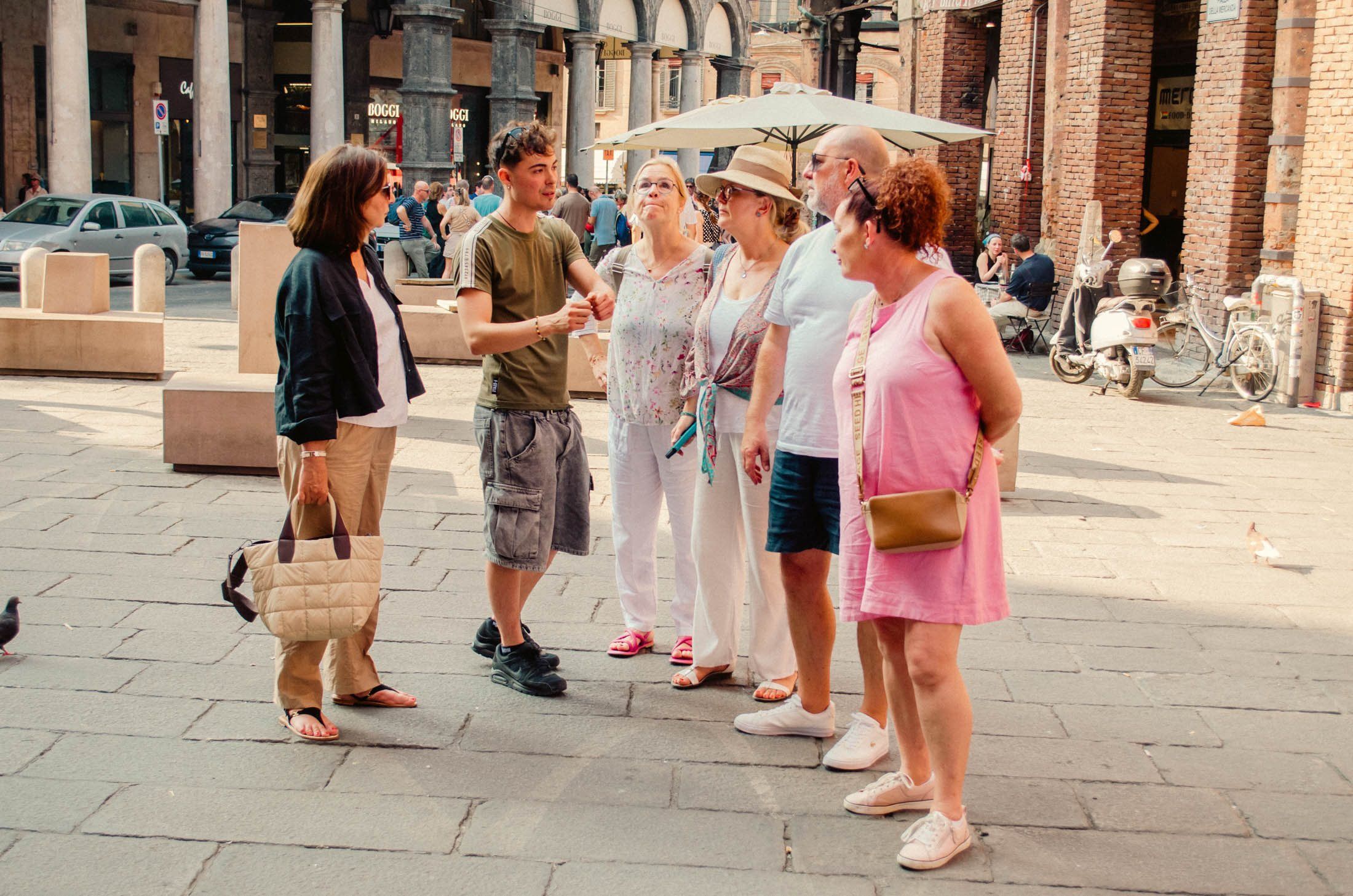
If you have never been to Bologna, a general walking tour on your first morning is worth the two hours. The centre is compact, but its story is not obvious from the street: why there are porticoes everywhere, why a city of this size once had dozens of towers, why the university matters so much to the way the place feels.
The simplest option is the one run by Bologna Welcome, the city’s tourist board. Its Discover Bologna walk lasts two hours, starts from the information point in Piazza Maggiore and costs €18, with entry to the Basilica of San Petronio included. It passes the Two Towers from the outside and covers the main squares of the centre. In English, it runs most often from Thursday to Sunday at this time of year, and on Friday to Sunday from mid-January, so check the calendar if you are coming midweek in winter.
Private guides and smaller companies offer similar routes for more money and a more personal pace. Either way, what you are paying for is the guide. A good one will make you look up at the porticoes, into the courtyards and down the side streets, and you will walk the rest of the city differently afterwards.
Our view: book it for your first day, not your last. It works as an orientation, and it tells you where you want to go back.

Towers and Views: What You Can Actually Climb
This is where a lot of older guides are out of date. The Asinelli Tower, the taller of the Two Towers and the climb most visitors came for, has been closed since 23 October 2023, because of the works to secure its neighbour, the leaning Garisenda. At the time of writing there is no reopening date. The terrace on top of San Petronio is also closed. Any tour that promises you the Asinelli climb is worth questioning.
The good news is that Bologna still has views, and some of them are better than the old ones:
- Torre dell’Orologio, the clock tower of Palazzo d’Accursio on Piazza Maggiore. Visits take about 40 minutes, booking is compulsory and tickets are €10 (€7 reduced). It is open every day until 31 December 2026, closed on Christmas Day. From the top you look straight down on the piazza and across to the Two Towers.
- The Specola, the old astronomical observatory tower of the university on Via Zamboni. Entry is on the hour in small groups of up to 15, from Tuesday to Sunday, at €8. It comes with a museum of old instruments, and it is one of the quieter visits in the city.
- The dome of San Luca, on the hill above the city, which we come to below.
Our view: the Torre dell’Orologio is the one we would book now. Do it late in the afternoon, when the light on the red roofs is at its best.
The Archiginnasio and the Anatomical Theatre
The Palazzo dell’Archiginnasio, a few steps from Piazza Maggiore, was the main seat of the University of Bologna for centuries. Its walls and ceilings are covered with thousands of coats of arms of former students, and upstairs is the Anatomical Theatre, a wooden lecture hall built for teaching anatomy, with tiered seats around a central marble table. It is one of the most remarkable rooms in Italy.
You can visit it in two ways, both booked online in advance. The audio-guided visit takes about 40 minutes and costs €10, with entry every ten minutes from Monday to Saturday. The guided tour in English takes an hour and a quarter and costs €12, with several departures a day from Monday to Saturday, and it gets you into parts of the building that the audio visit does not, such as the chapel of Santa Maria dei Bulgari, when they are not in use.
Our view: pay the extra for the guided tour. The building makes much more sense with someone explaining what the university was and who studied there. Note that it is closed on Sundays.

Walking (or Riding) Up to San Luca
The portico of San Luca is the longest of Bologna’s porticoes, which together became a UNESCO World Heritage Site in 2021. It runs for about 3.8 kilometres from Porta Saragozza up to the Sanctuary of the Madonna di San Luca, under some 666 arches, and the last stretch climbs steeply up the hill. It is not a tour in the bookable sense, but it is one of the best things to do in Bologna, and it costs nothing.
Allow an hour to an hour and a half to walk up at an easy pace, more if you stop. Go in the morning, wear proper shoes and bring water in summer. At the top, the dome of San Luca is open for climbs from Monday to Saturday, with hours split around lunch, and from midday on Sundays. There is no need to book; you check in at the desk inside the church. The view takes in the city, the hills and, on a clear day, the Apennines.
If you would rather not walk, the San Luca Express, a small tourist train, leaves from Piazza Maggiore and goes up to the sanctuary. The ride takes about an hour and costs €15. It is a fair option for families with small children or anyone who finds the climb too much.
Our view: walk up, and save your legs on the way down with a taxi if they object. The arches are the point.
Food Tours in Bologna
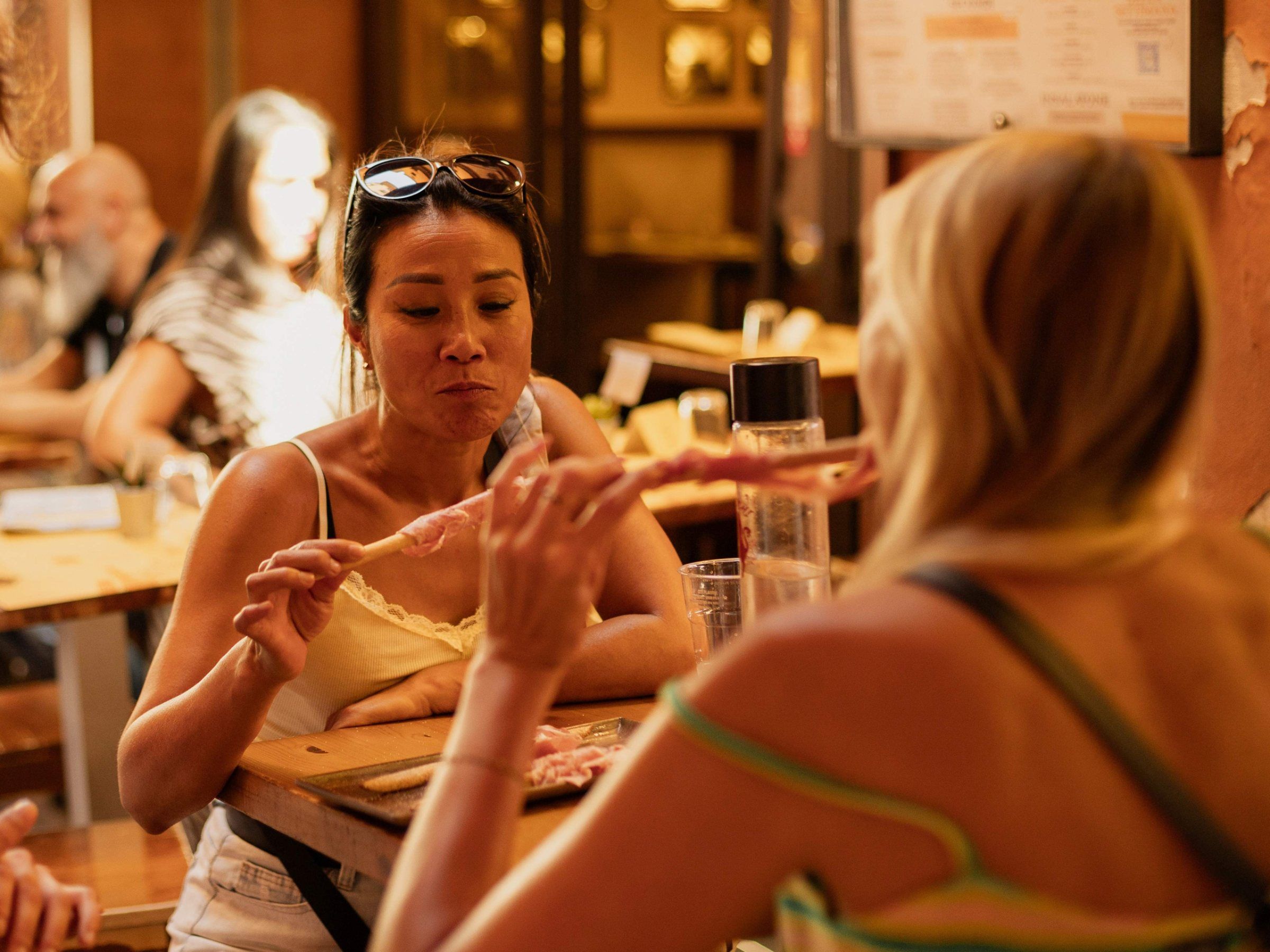
Bologna is the city where a food tour makes the most sense, because food here is not a side attraction. Mortadella, Parmigiano Reggiano, tortellini, tagliatelle al ragù and the wines of the hills are the city’s culture as much as its towers are. A good food tour explains why they taste the way they do, and leaves you knowing where to eat for the rest of your stay.
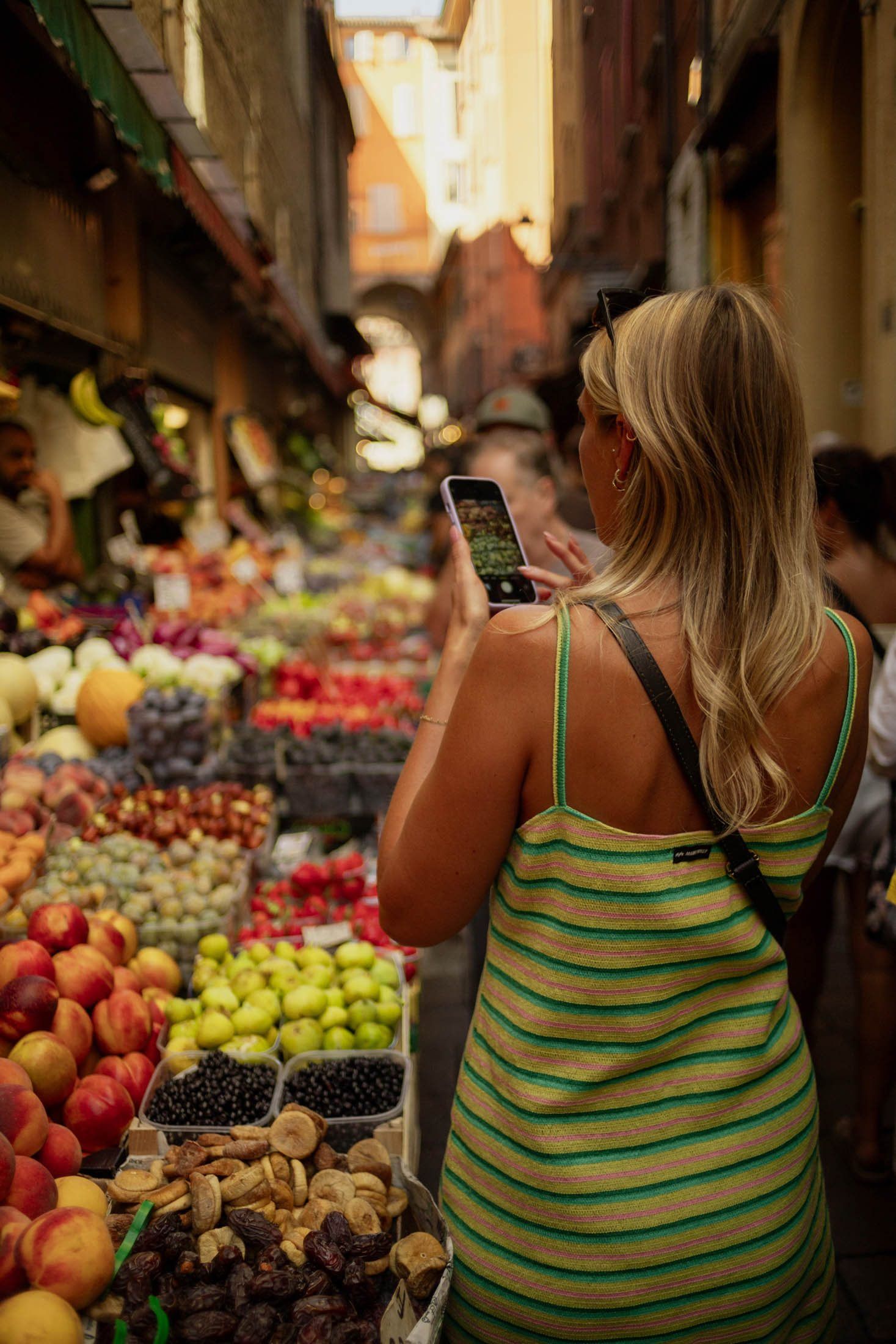
The best ones are small, led by guides who live here, and take you to the market streets and old shops of the Quadrilatero rather than to places that exist only for tour groups. What separates a good tour from a forgettable one, and the red flags to look for, are in our guide to choosing a Bologna food tour. If you want to explore the market lanes on your own, our Quadrilatero walking guide gives you a route.
We run three small-group food tours in Bologna, all starting from Piazza della Mercanzia: a street food walk at lunchtime or in the evening, a dinner with wine across several stops, and an aperitivo tour of the wine bars. They are one option among many, and we would say the same thing about any food tour: book it early in your stay, and come hungry.
Our view: of all the tours in Bologna, this is the one that changes how you spend the rest of your trip.
Day Tours from Bologna
Bologna sits on the main railway line through northern Italy, which makes it an excellent base for day trips. Many of them are easy to do by train on your own:
- Modena, 20 to 35 minutes away, for its cathedral, its market and traditional balsamic vinegar. Our guide to visiting an acetaia in Modena covers how that works.
- Ferrara, 30 to 50 minutes away, a walled Renaissance city that is easy to see by bicycle.
- Parma, around an hour away, for Parmigiano Reggiano and Prosciutto di Parma.
- Ravenna, about an hour to an hour and a quarter away, for its early Christian mosaics.
- Florence, 35 to 40 minutes on the high-speed train.
Where a guided day tour is worth it is the countryside: the Parmigiano dairies and prosciutto houses in the hills, and the Motor Valley, where car lovers visit the Ferrari museums in Maranello and Modena and the Lamborghini museum in Sant’Agata Bolognese. These are hard to reach by public transport, and a driver saves you a lot of time.
Our view: do the cities by train, and the countryside with a guide or a driver.
A Few Questions We Get Asked
What are the best tours in Bologna if I only have one day? A guided walk of the centre in the morning, the Anatomical Theatre or the Torre dell’Orologio in the afternoon, and a food tour or a long dinner in the evening. Save San Luca for a second morning if you can.
Can I still climb the Two Towers? Not at the moment. The Asinelli Tower has been closed since October 2023 and has no reopening date yet. The Torre dell’Orologio and the Specola are the best alternatives in the centre.
Do I need to book ahead? For the Torre dell’Orologio and the Archiginnasio, yes. For the city walking tour and food tours, a day or two ahead is usually enough outside the busiest weekends. For San Luca, no.
When is the best season? Spring and autumn, when the porticoes are pleasant to walk and the food is at its best. Bologna in August is hot and many places close for holidays.