
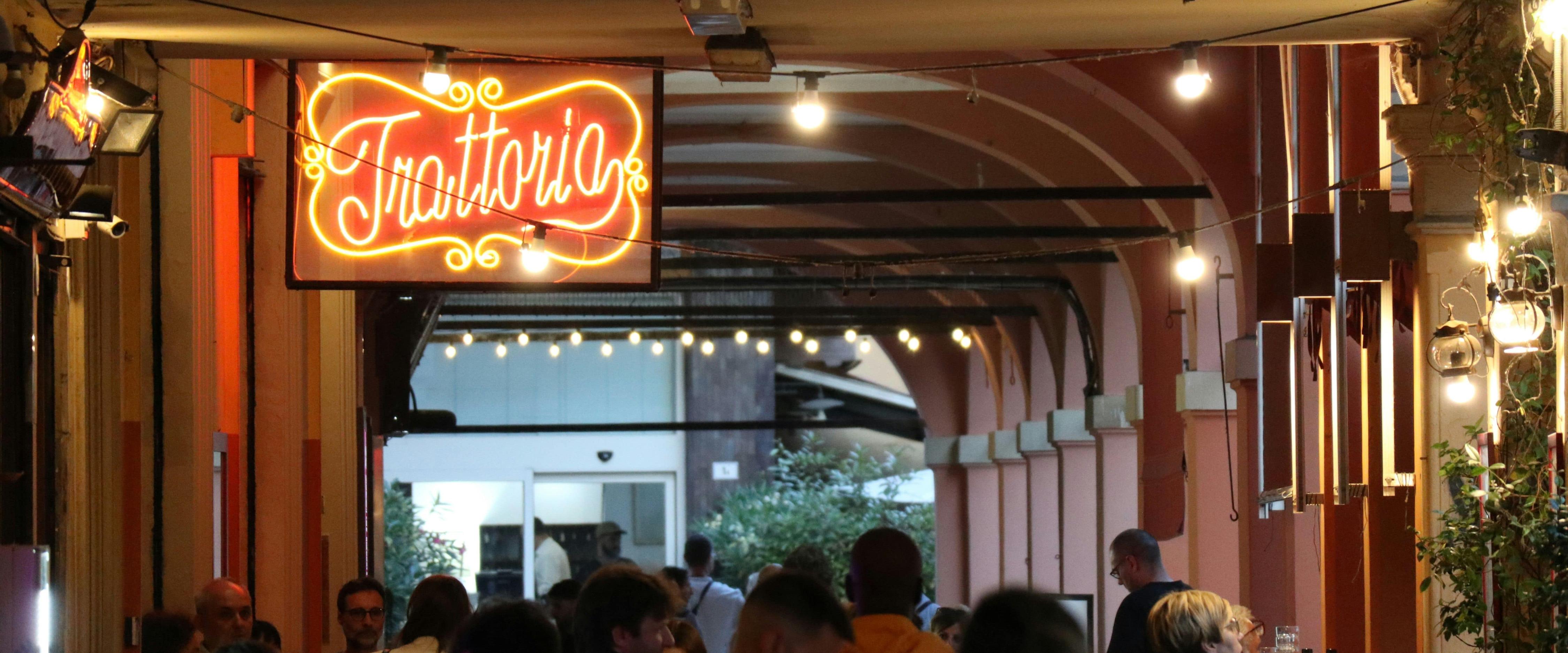
You have to understand that when you sit down in a trattoria in Bologna and order a plate of tagliatelle al ragù, you are not just eating dinner. You are eating a story that begins eight hundred years ago in a completely different country. The word itself gives it away. Ragù comes from the French ragoût, which means something like "to revive the appetite," and that tells you everything about where this dish really started.
The French had been making ragoûts since the twelfth century. It was not a sauce for pasta at all—it was a complete meal in itself, a slow-cooked stew of meat and vegetables that simmered for hours until the toughest cuts became tender and the liquid reduced into something rich and deeply flavoured. The nobles ate it at court, the peasants ate it in their cottages, and everyone loved it because it was cheap, filling, and could sit on the fire all day while you did other things. It was comfort food in the purest sense of the word.
That idea crossed the Alps sometime in the fourteenth or fifteenth century, and it arrived in Italy through two very different doors. The first was through Naples, where the French Angevin dynasty brought their culinary traditions to the south, and where the ragoût would eventually mutate into the great Neapolitan ragù, that dense, dark sauce with whole pieces of meat that still defines southern cooking today. The second door was further north, through the Papal States, and that is how the idea made its way to Bologna and the surrounding region. But for a long time, even in Italy, it remained a stew, a dish you ate on its own with bread to soak up the juices. Nobody in their right mind would have poured it over pasta. That would have seemed absurd.
Then comes the moment that changes everything. The year is roughly 1790, and we have a cook named Alberto Alvisi working for Cardinal Barnaba Chiaramonti in Imola, a town not far from Bologna. Alvisi writes down a recipe he calls "ragù per i maccheroni appasticciati"—ragù for messed-up macaroni. And that word appasticciati is crucial. It means messy, jumbled, mixed together. He was deliberately creating something that was meant to be combined with pasta, not eaten separately. It is the first documented instance of someone thinking of ragù as a condiment rather than a main course.
Now, if you could taste what Alvisi made, you would be baffled. There was no tomato in it whatsoever. Tomatoes had been in Europe for a couple of centuries by then, but northern Italians were suspicious of them and did not use them much. Instead, Alvisi used veal, pork loin, or even—and this is the part I love—chicken gizzard, all finely chopped. He thickened the sauce with so much flour that later food historians have described the result as having the consistency of wallpaper paste. And he flavoured it with spices like cinnamon, which were still common in savoury cooking at the time. It sounds pretty unappealing to our modern ears, but you have to remember that this was a transitional dish, a bridge between two worlds. It was a French idea being adapted to Italian ingredients and, most importantly, to Italian eating habits.
The next big step comes a full century later, in 1891, when Pellegrino Artusi publishes his masterpiece, La scienza in cucina e l'arte di mangiar bene. Artusi was not a professional chef; he was a silk merchant who loved food and spent years collecting recipes from all over Italy. His recipe for ragù is much closer to what we know today, but still not quite there. He calls it "bolognese" explicitly, which is the first time that name appears in print. He uses veal fillet, pancetta, butter, and the classic soffritto of onion, carrot, and celery. But again, tomato is barely mentioned. He suggests you can add a little tomato paste if you want, but it is almost an afterthought. The sauce is still fundamentally a meat sauce, not a tomato sauce with meat in it.
You have to remember something strange about the tomato itself. When it first arrived from the Americas in the 1530s, nobody in Italy wanted to eat it. It was a botanical curiosity, grown for its ornamental yellow fruits, which the Italians called pomodori—"golden apples." The plant belonged to the nightshade family, which made people deeply suspicious, and Renaissance doctors warned against eating raw vegetables anyway, believing they were cold and unhealthy. It took two hundred years before the poor of Naples, who had little access to meat, began experimenting with this suspicious fruit. They discovered that cooking it with oil and garlic transformed it completely, and from there, the tomato slowly began its climb into the Italian kitchen. But it was a slow climb. Even by Artusi's time, a century after Alvisi, the tomato was still not the star of the ragù. It was a guest, not the host.
It is only in the twentieth century that the ragù begins to look like the one we recognise. After the First World War, people started using beef instead of veal because it was cheaper and more widely available. The tomato became a permanent, essential ingredient rather than an optional extra. And crucially, the pasta itself changed. Those expensive, industrially made macaroni gave way to fresh egg tagliatelle, which were cheaper to make at home and had that rough, porous surface that grabs hold of the sauce and refuses to let go. It was a perfect marriage of pasta and condiment, and it solidified the dish as the emblem of Bolognese home cooking.
There is another layer to this story that people often overlook, and it has to do with the city's nickname. Bologna has been called la grassa—the fat one—since the Middle Ages. That reputation did not come from pasta. It came from the fact that the city was surrounded by fertile farmland, that its university brought thousands of hungry students and professors who needed feeding, and that its noble families spent fortunes on extravagant banquets. The ragù, with its richness and its slow, patient cooking, is the edible embodiment of that reputation. It is fat in the best sense of the word—abundant, generous, unapologetic.
In 1982, the Italian Academy of Cuisine decided to officially deposit the recipe for ragù alla Bolognese with the Bologna Chamber of Commerce. It was an act of cultural preservation, a way of saying "this is ours, and this is how it should be done." The official recipe calls for pancetta, beef, tomato sauce, broth, red wine, and a touch of cream or milk, along with the classic soffritto. But if you ask any Bolognese grandmother, she will tell you that the real recipe is the one she learned from her mother, and her mother learned from hers, and that does not need to be written down anywhere.
So when you eat a plate of tagliatelle al ragù, you are eating the French Middle Ages, the ingenuity of an eighteenth-century cook working for a cardinal, the meticulous collecting of a nineteenth-century silk merchant, and the twentieth-century ingenuity of home cooks who adapted the dish to what they had on hand. It is a dish that has travelled through time and space, absorbing influences and changing shape, but always remaining, at its core, exactly what it was meant to be: slow, rich, and comforting. The ragù is not just a recipe. It is a conversation between centuries. And it is still being written.