Blog9 November 2026
Bologna Food Tour: How to Choose the Right One
How to choose a Bologna food tour: group size, timing, what you should eat and drink, and the red flags to spot before you book, from people who live here.
Search for a Bologna food tour and you will find dozens of them, all promising the “real” Bologna, all with five-star photos of tortellini. Some are excellent. Some are a fast walk between shops that would sell you the same things without a guide.
We run food tours in this city, so we are not neutral. But we also eat here every day, and we know what separates a good afternoon from a forgettable one. This guide is what we would tell a friend who asked us how to choose, whether or not they ended up booking with us.
The short version: look at group size, timing, what you actually eat and drink, and how honest the description is. The longer version is below.

What a Bologna Food Tour Should Actually Include
A good food tour in Bologna is not a list of dishes. It is a way of understanding why this city eats the way it does.
That means the food should come with context. Why is Parmigiano Reggiano aged for so long? Why does mortadella have those little cubes of fat? Why do Bolognesi get quietly annoyed when someone says “spaghetti bolognese”? A guide who lives here should be able to answer all of that, and the answers should change how the next bite tastes.
At the very least, a solid tour should give you:
- The city’s core products, properly explained. Mortadella Bologna, Parmigiano Reggiano at different ages, and traditional balsamic vinegar from nearby Modena are the foundations. You should learn how to tell good from ordinary, not only taste them.
- Fresh pasta in some form. Tortellini, tortelloni, tagliatelle. Bologna without its pasta is like Naples without pizza.
- Local wine. Emilia-Romagna is not Tuscany or Piedmont, and that is the point. Lambrusco, Pignoletto and Sangiovese from Romagna say a lot about how people here eat.
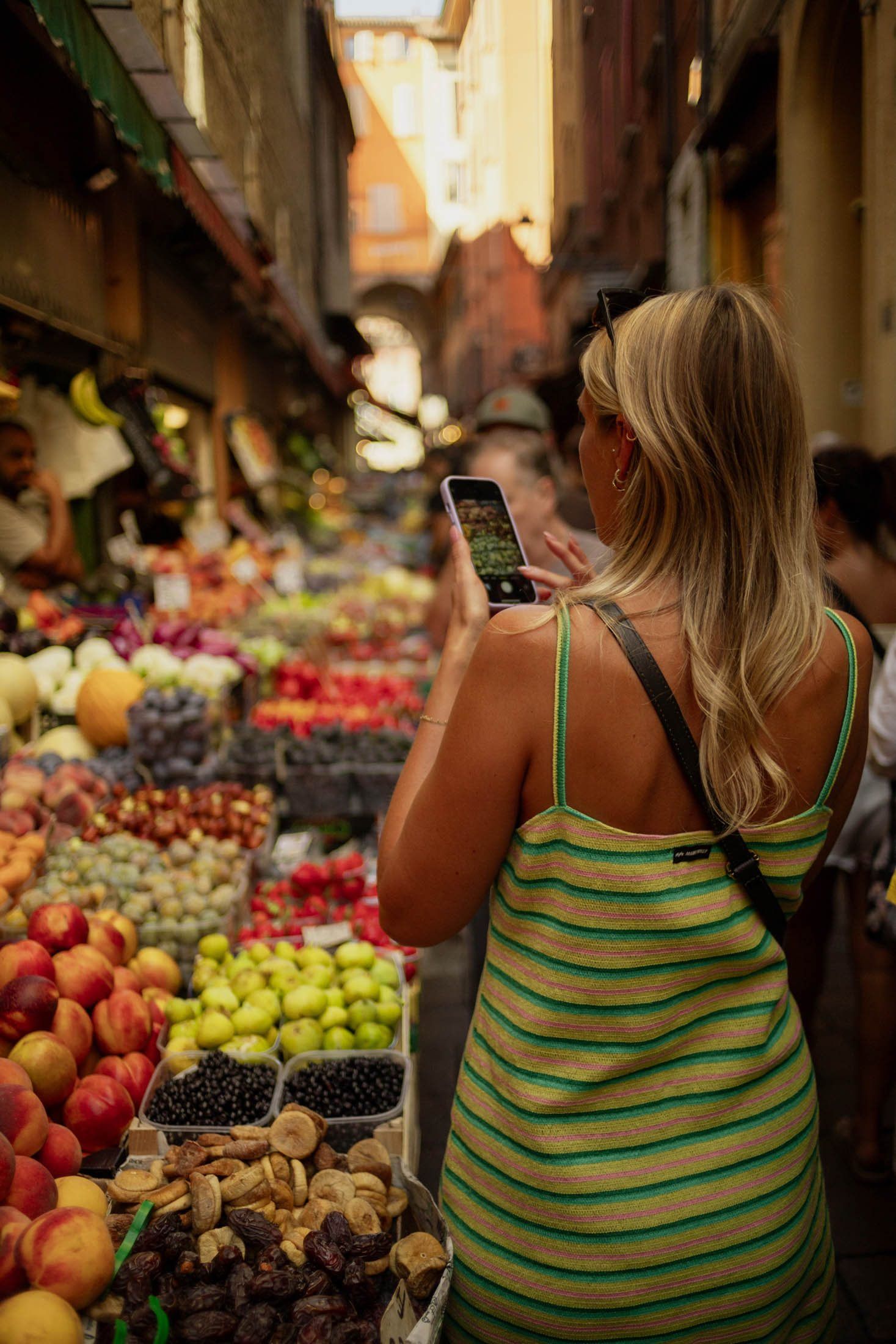
- Time in the old market streets. The Quadrilatero, the tangle of narrow streets just off Piazza Maggiore, has been a place of trade since the Middle Ages. Street names such as Via Pescherie Vecchie and Via Drapperie still carry the trades that once filled them.
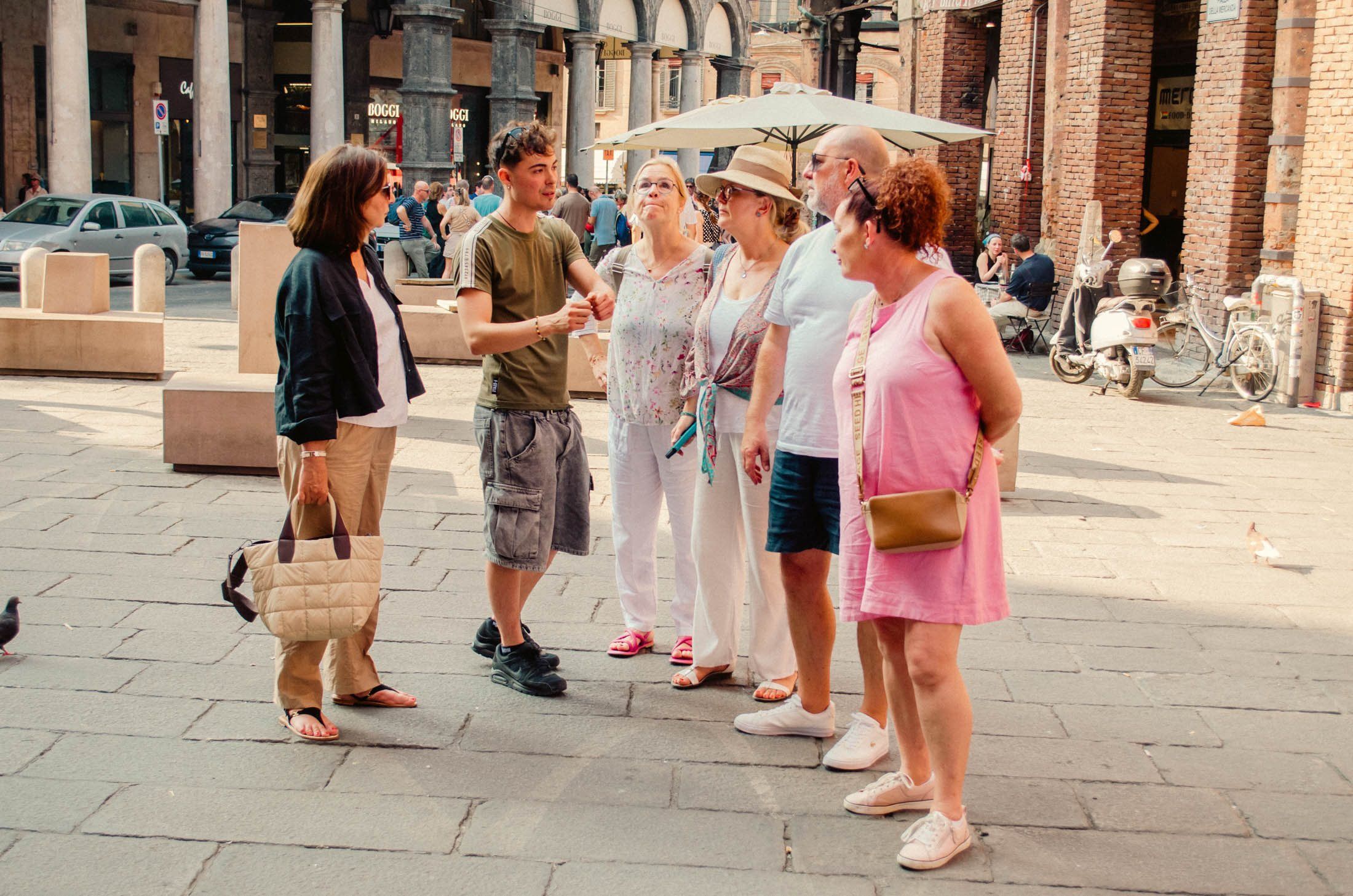
- A guide who actually lives in Bologna. Not someone reading a script, but someone who shops at these counters, has opinions about tortellini, and can tell you where to eat for the rest of your stay.
If you want a primer on the dishes themselves before you come, our guide to what to eat in Bologna covers the essentials.
Group Size Changes Everything
This is the single most important thing to check, and many listings make it hard to find.
Bologna’s historic food shops are small. Many counters in the Quadrilatero have room for a handful of customers at a time, and the osterie in the side streets were built for locals, not coach groups. A group of eight or ten can stand at a counter, talk to the person slicing the prosciutto, and ask questions. A group of twenty-five blocks the street, waits outside while samples are passed through a door, and hears half of what the guide says.
What to look for:
- A stated maximum. “Small group” on its own means very little. Look for a number.
- Seated stops. At least one or two places where you sit down, eat properly and talk.
- Private options for families or special occasions. If you are travelling as a group of four or more, a private tour can cost less per head than you think and is far more flexible.
Small groups also make the tour more social. Some of the best moments happen when strangers from different countries end up sharing a board of salumi and a bottle of wine as if they had known each other for years.
Timing a Food Tour in Bologna: Lunch, Evening or Aperitivo
The time of day shapes the whole experience, so it is worth choosing deliberately.
Late morning and lunchtime is when the market streets are at their liveliest. The counters are full, people are shopping for the day, and the atmosphere is busy and local. This is the best time if you want to see the Quadrilatero working as a market rather than a backdrop.
Evening tours are slower and more like a progressive dinner. The light softens under the porticoes, wine becomes more central, and the pasta course feels like a proper meal rather than a tasting. This suits people who want a long, relaxed night out.
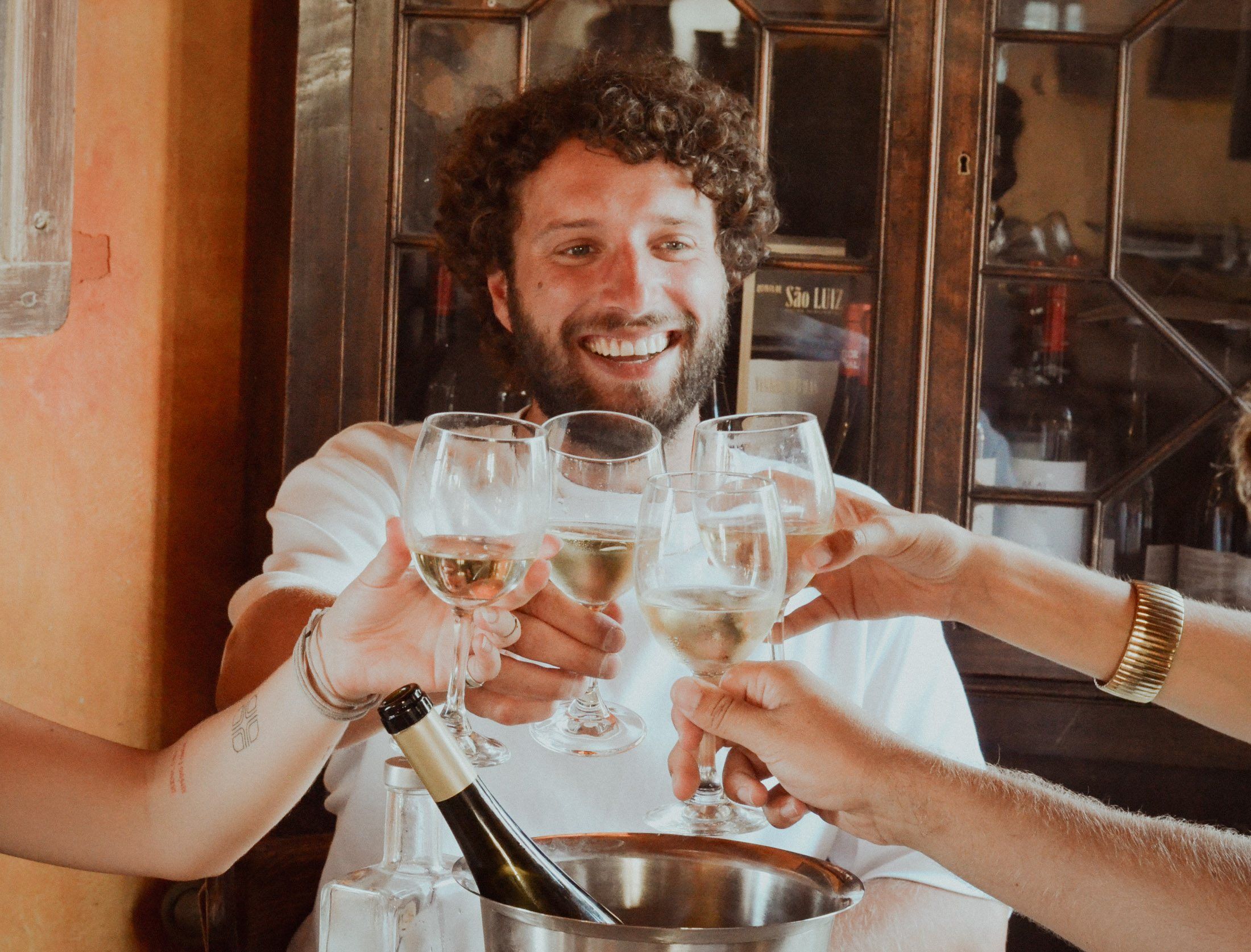
Aperitivo is something different again. In Bologna, the early evening glass is a ritual: a Spritz or a glass of Pignoletto, something to eat with it, and a lot of conversation. A tour built around wine bars is less about filling up and more about how the city socialises.
Our own Bologna tours follow this logic: a Street Food Tour that starts at 11:30 or 18:00, an evening of dinner, wine and tastings, and a three-hour aperitivo through wine bars. Whichever company you choose, pick the timing that matches the way you like to eat, not the slot that happens to be free.
A practical note: do not plan a big lunch on the same day as a lunchtime food tour. People underestimate how much a good tour feeds them, and every year someone tells us they had booked a table for an hour later.

What You Should Actually Eat (and Drink)
The best way to judge a tour is the tasting list. Read it carefully, because the details tell you a lot.
Good signs:
- Parmigiano Reggiano at more than one age, so you can taste the difference between a younger, milkier cheese and an older, crystalline one.
- Mortadella sliced fresh, ideally with an explanation of what makes Mortadella Bologna IGP different from the industrial versions sold abroad.
- Traditional balsamic vinegar, tasted on its own or on cheese, not poured over a salad.
- A pasta dish made fresh: tortellini, tortelloni or tagliatelle al ragù. The history of ragù alone is a long story, which we tell in the long road to ragù.
- Something from the street-food side of the city, such as crescentine (fried dough) or tigelle with cured meats.
- Local wine that is introduced, not just poured.
- Something sweet to finish, often gelato.
Things that should make you pause:
- A list full of generic Italian items, such as pizza, cannoli or tiramisù, with very little that is specific to Bologna or Emilia-Romagna.
- Vague phrases like “local delicacies” with nothing named.
- No mention of drinks at all, or drinks listed only as “optional extras”.
A tour should leave you full but not stuffed, and with a much clearer idea of what to order in a trattoria the next night.
Red Flags When Booking a Food Tour in Bologna
Most food tours here are run by people who care about the city. But a few warning signs are worth knowing.
Prices that look too low. Real Parmigiano, good mortadella and decent wine cost money, and so does a guide paid fairly. A very cheap tour usually means smaller portions, fewer stops or a very large group.
No clear meeting point or duration. A serious operator tells you exactly where to meet, how long the tour lasts and roughly how many stops there are.
Rushed itineraries. Six or seven stops packed into two hours means more walking than eating. Bologna is a city that rewards slowness.
Over-promising. “Secret” places that every other tour also visits, or claims that you will eat “only where locals go” while the photos show the busiest street in town.
No dietary information. A good company tells you upfront what it can and cannot accommodate. Bologna’s cuisine relies heavily on pork, dairy and wheat, so tours are often difficult for vegans or people with coeliac disease. An honest operator says so before you pay, not on the day.
Reviews that only talk about the guide’s personality. A great guide matters, but look for reviews that mention the food too. If nobody remembers what they ate, that tells you something.
Questions Worth Asking Before You Book
If the listing does not answer these, send a quick message. A good company will reply clearly.
How many people are in the group? Ask for the maximum, not the average.
Is it enough for lunch or dinner? Most good tours are, but it varies. Knowing this helps you plan the rest of the day.
Can you handle my dietary needs? Vegetarians are usually easy to look after in Bologna. Vegan, gluten-free and serious allergies need a clear answer in advance.
What is the cancellation policy? Plans change, especially on longer trips around Italy. Free cancellation up to a day before is common and worth looking for.
Can children come? Many food tours welcome children, sometimes at a reduced price. Bologna is a relaxed city for families, and a food walk can be a good way to keep younger travellers interested.
Where does it start? Somewhere central and easy to find makes a big difference. Our tours meet in Piazza della Mercanzia, under the arches of the old merchants’ hall, a short walk from the Two Towers and Piazza Maggiore.
Choosing well is mostly about honesty: a clear group size, a real tasting list, a sensible pace and a guide who knows the city from the inside. Get those right and a food tour becomes the best introduction to Bologna you could ask for, and the start of a few days of eating very well.