
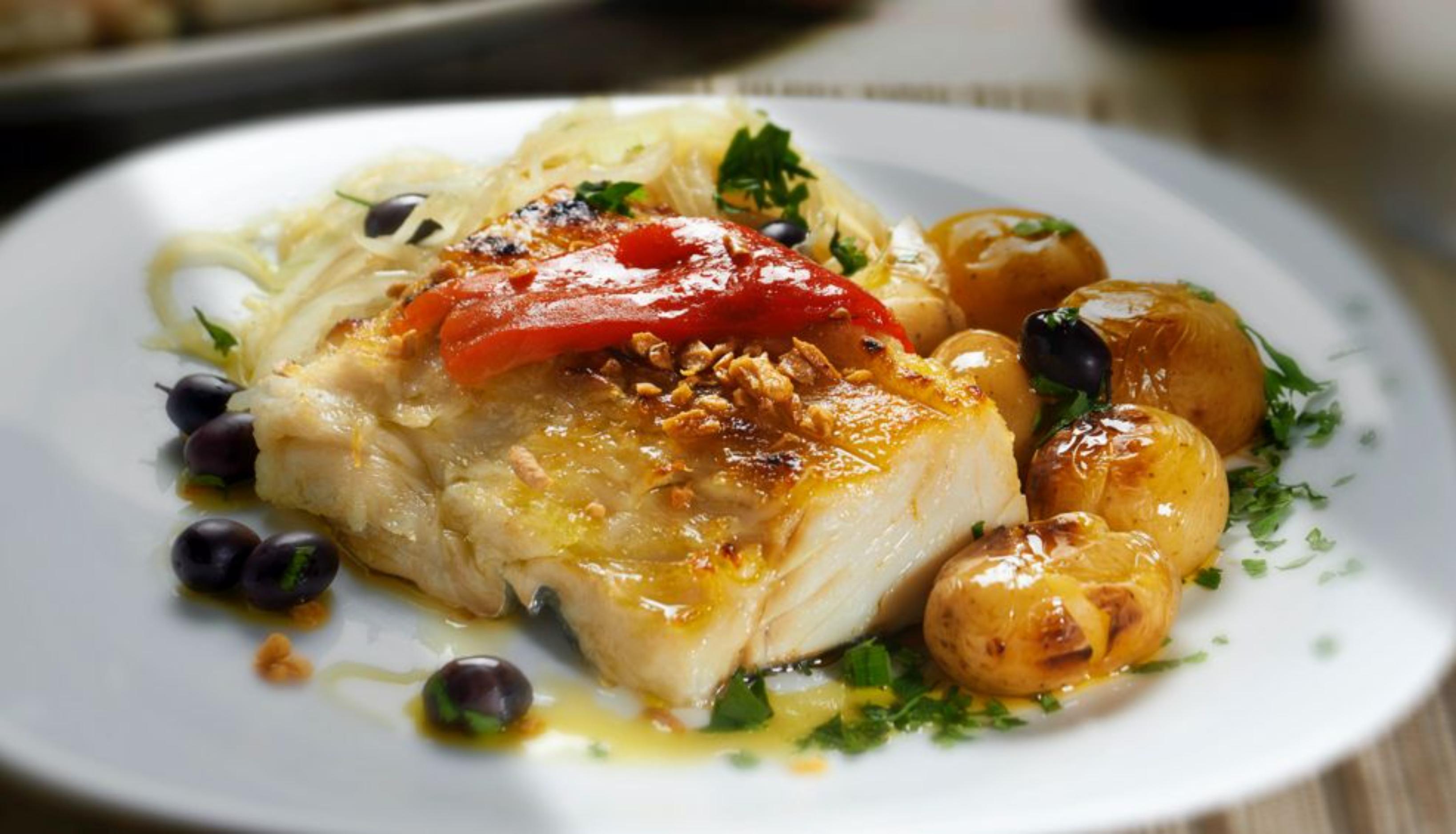
You can smell it before you see it. Walk through any Lisbon neighbourhood around dinner time, and that unmistakable fragrance—olive oil hitting hot garlic, onions turning translucent, a faint briny whisper from the pan—tells you exactly what’s coming. Lift the lid on a thousand Portuguese kitchens, and you will find the same ghostly white flesh, flaking apart like memory itself. They call it bacalhau, and they speak of it with the kind of reverence most nations reserve for flags or battlefields.
But here is the beautiful joke history plays on this country: the Atlantic cod—Gadus morhua, to be scientific about it—has never once swum in Portuguese waters. Not a single one. It is an arctic creature, fat and lazy in the freezing depths off Newfoundland, Greenland, and Norway. So how on earth did a foreign fish become the absolute ruler of a seafaring nation with eight hundred kilometres of coastline stuffed full of sardines, mackerel, and sea bass? The answer takes us on a much stranger journey than you might expect.
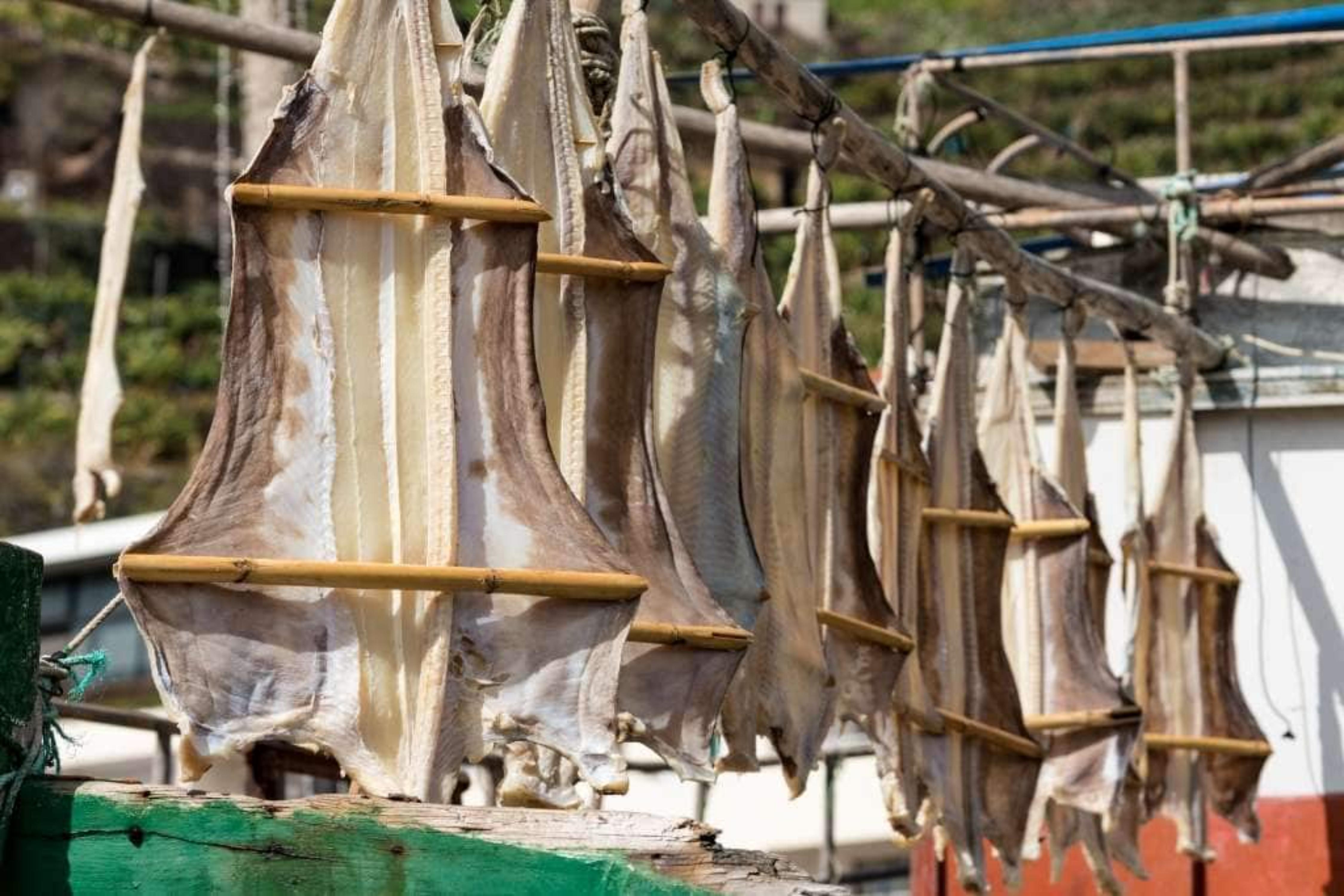
It starts with biology, oddly enough. Cod has almost no fat in its muscle—all that oil is packed into its liver—which means its flesh is dense, white, and soaked with water. That peculiarity turned out to be a gift from heaven for medieval sailors. When you gut a cod, split it open, bury it in coarse salt, and let the sun and wind do their work, something magical happens. The salt pulls out every drop of moisture, and the flesh becomes a rigid, lightweight plank that weighs almost nothing and will not rot for a year. Compare that to a fatty sardine, which turns rancid within weeks, and you can see why the Portuguese navigators who rounded the Cape of Good Hope did not survive on spices or citrus—they survived on this stuff. They called it their fiel amigo, their faithful friend, and they meant it with every aching bone on those interminable voyages.
But survival alone does not make a national dish. That honour came from the Church. Portugal in the old days was fiercely, almost oppressively Catholic, and the liturgical calendar was littered with days when you could not eat meat—Lent, Advent, the vigils of every major saint. Fish was allowed, but fresh fish was expensive and rarely made it inland without turning. Salted cod, though, was cheap, stable, and available everywhere from the grandest nobleman's pantry to the poorest peasant's cupboard. Yet it was the Christmas Eve supper—the Consoada—that truly sealed the deal. After Midnight Mass, families would come home to a bare, almost penitential meal of boiled cod with potatoes and cabbage, all drowned in good olive oil. No fuss, no flamboyance, just quiet togetherness. Do that for five hundred years, generation after generation, and you are no longer eating fish—you are eating your grandmother's prayers.
Then politics got involved, as it always does. For centuries, Portugal bought its cod from the Basques and the English; they did the dangerous work, and the Portuguese just paid the bill. But in the nineteenth and twentieth centuries, nationalism kicked in, and Salazar's dictatorship decided that Portugal needed to catch its own fish. They built the Frota Branca, the White Fleet, a ragged armada of sailing ships that departed every spring from the little port of Ílhavo, bound for the frozen hell of the Grand Banks. Those fishermen lived through six months of fog, freezing spray, and eighteen-hour days, leaning over the side of tiny rowboats called dories to haul up each cod by hand. It was brutal, ugly work, and the regime turned it into propaganda gold. The cod fisherman became a national hero—stoic, suffering, utterly Portuguese. Schoolchildren learned that cod was more Portuguese than the cork tree, which is saying something. Never mind that the Grand Banks were not Portuguese territory. Ownership, in the national imagination, stopped being about geography. It became about blood and sweat.
Now, every Portuguese housewife will tell you with a knowing wink that they have three hundred and sixty-five ways to cook cod—one for every day of the year. That is not mathematically true, I have counted, and you get to about a hundred and eighty named recipes before you start repeating variations, but the point is not the number. The point is the sheer range of what this dried, salted plank can become. In Porto, you get Bacalhau à Gomes de Sá, a sturdy casserole of shredded fish, potatoes, onions, black olives, and hard-boiled eggs, all baked until the top goes golden and crispy. In Lisbon, they do Bacalhau à Brás, a quick tavern scramble of flaked cod with thin matchstick potatoes and onions, bound with eggs and finished with a shower of olives—it is the kind of dish you eat at two in the morning after a few glasses of wine, and it fixes everything. Down in the Algarve, they go decadent with Bacalhau com Natas, a rich, oven-baked gratin swimming in cream and nutmeg, which shows you the Moorish influence on dairy. But my favourite, the one that tells you everything, is the simplest: boiled cod with boiled potatoes and cabbage, nothing more. That is what the fishermen ate on the boats. It is austere, almost stubbornly plain, and that plainness is the whole soul of the matter.
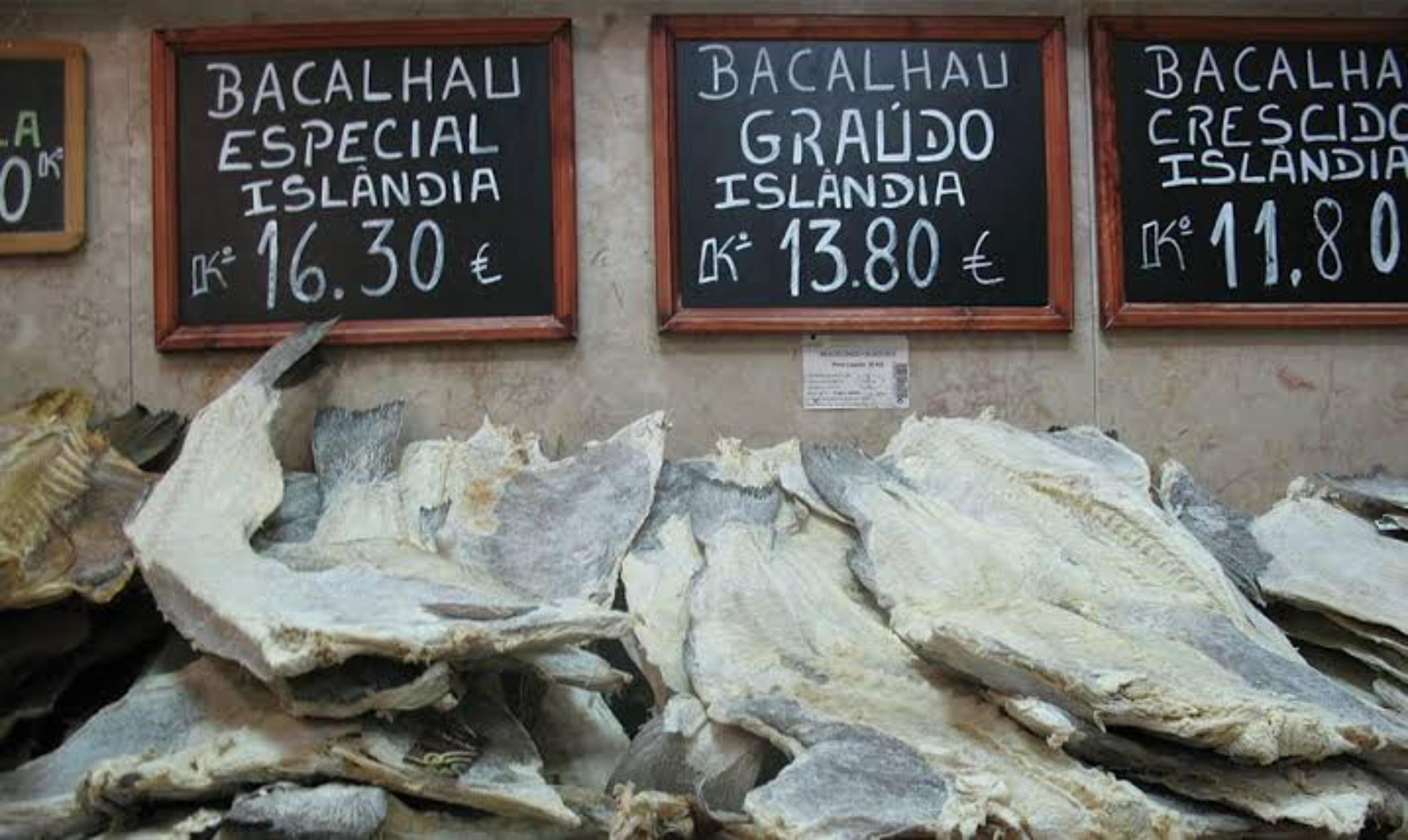
Today, you will not find Portuguese trawlers on the Grand Banks anymore—conservation quotas and exclusive economic zones put an end to that in the seventies. Over seventy percent of the cod eaten in Portugal now comes from Norway, Iceland, or Russia, shipped in frozen and salted just like the old days. Yet Portugal still consumes roughly twenty percent of the entire world's cod production, which is an absurd number for a country of ten million people. So why does nobody care about the origin? Because identity is not about where something comes from; it is about what you do with it. A Portuguese cook does not treat Norwegian cod as a foreign ingredient. She soaks it for two days, changing the water three times to draw out the salt, checking the texture with her fingers until it feels exactly like her mother taught her. She chooses the posta cut or the lombo cut, sniffs for the right balance of salt and dryness, and then she cooks it in a way that has not changed in centuries. The raw material may cross an ocean, but the craft is pure, unbroken Portuguese.
And here is the deepest part of it, the part that always gets me when I lead tours through the Mercado da Ribeira. Cod is not fast food. It demands patience. You cannot just open a tin and heat it up; you have to plan, to wait, to trust the process. That slowness embeds it in memory. The great novelist Eça de Queirós, who was never one for sentimental nonsense, once wrote that his love for Portugal was measurable by his love for a plate of cod with onions. He was not being poetic for effect. He was saying that a nation is not a border or a flag—it is a flavour that stays with you long after you have left.
So when you sit down in a tiny tasca in Alfama and order your first bacalhau, do not ask the waiter if it is fresh. That question misses the entire point. What you are about to eat is not seafood in the usual sense. It is a dehydrated piece of history that has been brought back to life with water, time, and love. You are tasting the voyages of Vasco da Gama, the cold vigils of the Grand Banks fishermen, the silent prayers of Christmas Eves past, and the quiet, unshowy labour of every grandmother who ever soaked a plank of salted fish in her kitchen sink. That fish crossed an ocean not to reach Portugal, but to become Portugal. And if that is not the most beautiful contradiction in European cooking, I do not know what is.